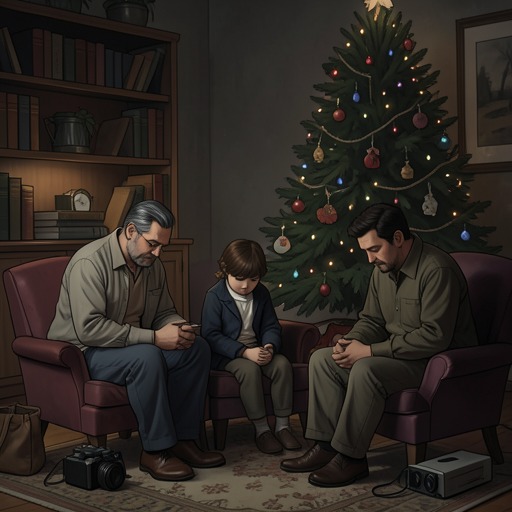
Christmas season, 1952
Annie’s Christmas Wonder
Five-year-old [Annie Whittaker](entity:character-recall-character-annie-whittaker-86014364ff05) delights in the lights, carols, baking, and family rituals of [Christmas](entity:time-recall-time-christmas-a573265d0167). Her parents, [Elizabeth Whittaker](entity:character-recall-character-elizabeth-whittaker-d5f7f6cb5467) and [John Whittaker](entity:character-recall-character-john-whittaker-2521bdc9cf06), and her older brother, [Tommy Whittaker](entity:character-recall-character-tommy-whittaker-e8c452d90da1), cherish the warmth and security of their household, with Annie especially devoted to Tommy.
The family’s happiness gives the coming loss its full weight. Annie’s life is framed as a precious gift, a way of seeing that will shape how the survivors understand grief and the briefness of human bonds.
Christmas Eve, 1952
A Family’s Christmas Eve
The Whittakers decorate their tree, attend midnight Mass, and return home after Annie falls asleep. The next morning she wakes late with a headache and seems subdued, though she rallies enough to enjoy her presents and play outside.
That evening, her flushed face, confusion, fever, and complaint of neck pain alarm Elizabeth. John and their family doctor initially believe she has a common illness, and Annie is put to bed while the family hopes she will recover after resting.
The morning after Christmas, 1952
Annie Falls Into a Coma
Elizabeth finds Annie barely breathing and impossible to wake. The family doctor examines her, suspects meningitis, and rushes her to hospital. A spinal tap confirms the diagnosis, while Annie’s fever climbs to a devastating 106.9 degrees and she slips deeper into a coma.
The doctors can do little beyond watch and hope. Elizabeth stays at Annie’s bedside, pleading with her to wake, while John and Tommy struggle to face the possibility of losing her.
Christmas night, 1952
Annie’s Last Words
After hours of unconsciousness, Annie opens her eyes briefly and tells her family that she loves them. She asks for Tommy, then thanks them before sinking back into sleep. Tommy takes the moment as a sign that she is recovering, but Elizabeth senses that Annie is slipping away.
Elizabeth and John remain with their daughter as she dies shortly before midnight. Her final words turn the family’s memories of their little girl into a lasting expression of the book’s central idea: a life can be brief and still give immeasurable love.
Two days before New Year’s Eve, 1952
The Whittakers Bury Annie
Friends, teachers, and neighbors gather at Annie’s funeral. The family doctor admits that he regrets not visiting when Elizabeth called, though he believes that even earlier treatment would not have changed the outcome. Elizabeth and John blame themselves for waiting; Tommy privately blames himself too.
At the graveside, Elizabeth cannot bear to leave her daughter’s coffin. Tommy’s hockey coach comforts him with the thought that Annie’s love will remain with him, urging him to speak to her in memory and notice the blessings she left behind.
Winter to spring, 1953
The Family Withdraws
After the funeral, the Whittakers retreat into separate grief. Tommy avoids Annie’s room and the family table, his grades fall, and he gives up sports. At home, Elizabeth and John stop eating together, and their exchanges turn into arguments about minor household matters that conceal their pain.
Tommy begins smoking and drinking alone under the back steps. The death has not only taken Annie from the family; it has fractured the daily habits and closeness that once held the remaining three together.
Early spring, 1953
Maribeth’s Constricted Home
In [Onawa](entity:location-recall-location-onawa-e5f697537b70), [Maribeth Robertson](entity:character-recall-character-maribeth-robertson-f2c9fb6ba96e) faces a household ruled by her father, [Bert Robertson](entity:character-recall-character-bert-robertson-f8a137fec40c), whose rigid beliefs confine women to marriage and domestic work. Her mother, [Margaret Robertson](entity:character-recall-character-margaret-robertson-24da35f1a345), rarely challenges him, while her brother, [Ryan Robertson](entity:character-recall-character-ryan-robertson-411ea1870fe4), has been allowed far more freedom than his sisters.
Maribeth wants education, independence, and a life beyond her hometown. Her younger sister, [Noelle Robertson](entity:character-recall-character-noelle-robertson-da5f8119a823), is the family member closest to her, but Maribeth has few peers who share her ambitions and feels isolated by her intelligence and difference.
Spring, 1953
The Spring Dance Dispute
Bert forbids Maribeth to wear the bright, strapless dress she has borrowed for the school dance, calling it indecent. Margaret helps her find a plain, conservative alternative, and Maribeth goes with David O’Connor, a boy she barely knows, feeling embarrassed and out of place.
The argument exposes the gendered limits Maribeth is expected to accept. Her father’s control over her clothing and prospects intensifies her longing to decide her own future.
The night of the spring dance, 1953
Maribeth Meets Paul
At the dance, Maribeth discovers that David is drinking spiked punch and withdraws from the crowd. [Paul Browne](entity:character-recall-character-paul-browne-97982a558c11), a handsome senior and football star, finds her outside; they joke about Cinderella, then leave together for a diner when she sees that her date is drunk.
Paul’s attention feels exhilarating to Maribeth, who has seldom been noticed by the boys she admires. Their easy conversation and shared dancing make the evening seem like the beginning of the romance she has wanted.
Late on the night of the spring dance, 1953
A Night in Paul’s Car
After the diner, Paul drives Maribeth to a secluded spot and offers her gin. They kiss, and despite her attempts to slow things down, they have sex in the car. Paul apologizes afterward when he realizes she was a virgin, but assures her that he will see her again and suggests they continue their intimacy.
Maribeth is excited, confused, and frightened by the experience, especially by the possibility of pregnancy. She returns home just before midnight and lies awake wondering whether Paul’s declarations of affection mean anything lasting.
The Monday after the dance, 1953
Paul Returns to Debbie
Maribeth arrives at school expecting her encounter with Paul to have changed their relationship, but finds him back with Debbie Flowers. Rumors spread that he had gone out with another girl, and Paul later tells Maribeth that he has reconciled with Debbie and plans to marry her after graduation.
He says the night with Maribeth mattered, but not enough to alter his plans. Maribeth is hurt, yet she refuses to demand a marriage from someone who does not love her.
About six weeks after the dance, 1953
Maribeth Discovers the Pregnancy
As nausea and other changes intensify, Maribeth suspects that she is pregnant. She secretly visits her mother’s doctor, who confirms that she is two months along and asks what she intends to do. Maribeth is terrified of telling her father and asks about abortion; the doctor says it is dangerous, expensive, and illegal, and recommends adoption instead.
The doctor suggests that she stay with the [Sisters of Charity](entity:organization-recall-organization-sisters-of-chari-bee8972a5782) when her pregnancy begins to show. Maribeth faces the prospect of carrying a child she does not feel ready to raise, while trying to preserve the education and future she still hopes to claim.
Late spring, 1953
Maribeth Tells Paul
Maribeth tells Paul that she is pregnant. He reacts with distress and says he is about to marry Debbie; he does not want a child and suggests that Maribeth seek an abortion. She refuses and says she plans to place the baby for adoption.
Paul admits that he thought their night together meant something, but he will not abandon his engagement. Maribeth leaves the conversation knowing that she must face the pregnancy largely alone.
Early summer, 1953
Bert Learns the Truth
Ryan discovers Maribeth vomiting and realizes she is pregnant. He tells Bert, who confronts his daughter, demands the father’s name, and denounces her as a disgrace. Maribeth refuses to identify Paul, partly because she will not be forced into a marriage with a man she does not love.
Bert insists that she cannot remain at home or keep the baby. He arranges for her to live at the [Sisters of Charity](entity:organization-recall-organization-sisters-of-chari-bee8972a5782) until delivery, forbids contact with her mother and Noelle, and tells her to return only after the baby has been given up.
The night before Maribeth leaves home, early summer 1953
A Sister’s Goodbye
Maribeth packs while Noelle fears that she is being sent away for an unexplained offense. Unable to withstand her sister’s questions, Maribeth gives her only a partial explanation, and the two girls cling to each other through the night.
Margaret hugs Maribeth the next morning and promises to visit, while Bert drives her to the convent without turning back when she says she loves him. The separation leaves Maribeth cut off from the people she most wants to keep close.
The first days at the Sisters of Charity, early summer 1953
The Convent’s Other Girls
Marybeth found the convent gloomy and oppressive. There were also two other pregnant girls living there: one had given birth and had never seen her child again, and the other became pregnant due to her uncle, experienced a long and difficult childbirth, and was then sent to the hospital for a cesare
A few weeks after arriving, summer 1953
Maribeth Leaves the Convent
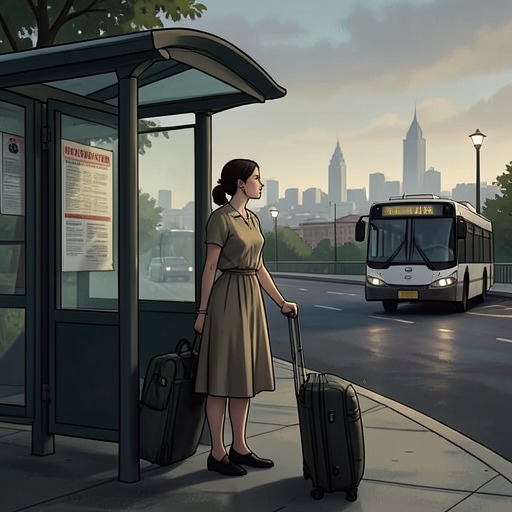
After seeing Paul and Debbie’s wedding notice, Maribeth decides she cannot remain at the convent waiting to give up her child. She leaves at dawn with the money Bert provided and boards a bus toward [Chicago](entity:location-recall-location-chicago-eb77a855d5aa), determined to find work and live independently until the birth.
She sends postcards to Margaret and Noelle with a promise to provide an address later. For the first time since her pregnancy became known, Maribeth feels that the future belongs at least partly to her own choices.
Summer 1953, during the bus journey
A Job at Jimmy D’s
At a stop in a cheerful college town, Maribeth notices a hiring sign in Jimmy D’s. She approaches [Julie](entity:character-recall-character-julie-5a82eb7a07d7), a waitress, and claims to be an eighteen-year-old widow whose husband died in Korea. Julie gives her a trial shift, a place to sleep, and later helps her find a small rented room nearby.
Maribeth quickly begins working long shifts and keeps her pregnancy secret, fearing that the restaurant will not employ her if the truth is known. The town offers her the first practical foothold in the independent life she has imagined.
Early summer 1953, soon after Maribeth arrives
Tommy Meets Maribeth
Tommy, now sixteen and still grieving Annie, eats frequently at Jimmy D’s because meals at home have largely disappeared. When Maribeth waits on him, their conversation quickly moves from food to books, school, and their interests; he returns repeatedly to see her.
Maribeth recognizes the sadness behind his quiet manner, while Tommy is drawn to her intelligence and warmth. Their acquaintance becomes a rare source of ease for both of them.
A Friday in early summer 1953
The Lake Conversation
Tommy takes Maribeth to a lake for lunch and fishing. She tells him about her ambition to study and about the family conflict that drove her away from home; he tells her about Annie’s death and the emptiness that followed it.
Maribeth suggests that some people pass through a life to bring a gift or lesson before moving on. Her account gives Tommy a new way to think about Annie, and their shared conversation begins to turn acquaintance into trust.
The first lake outing, early summer 1953
Maribeth Feels the Baby Move
As Tommy and Maribeth rest on the sand after racing, she feels the first unmistakable flutter of the baby. The sensation brings the pregnancy sharply back into the present, even as she tries to enjoy an afternoon in which she feels less alone.
She does not tell Tommy yet. Her secret still governs her decisions, and she worries that revealing it will end the friendship just as it is beginning.
Summer 1953, seven months after Annie’s death
The Family’s Unraveling
Tommy returns home from an outing with Maribeth to find that Elizabeth has tried to make a family dinner. John comes home late and drunk, the roast is ruined, and Elizabeth’s attempt to gather the family collapses into anger and despair. Tommy urges his parents to try spending time together again, but neither can yet respond to the invitation.
Elizabeth and John remain estranged, and she believes she can no longer have another child. Tommy, who has lost both Annie and the home he remembers, finds hope chiefly in the prospect of seeing Maribeth again.
Summer 1953, before another lake outing
Tommy Speaks at Annie’s Grave
Tommy visits Annie’s grave and tells her about Maribeth, imagining that his sister would have approved of the girl he likes. He recognizes in Maribeth some of Annie’s candor and mischief, and the conversation helps him carry his sister’s memory into his new friendship.
When Tommy and Maribeth later compare dreams of Annie, they describe the same peaceful image of her with them. Maribeth’s idea of a continuing stream of people who enter and leave one another’s lives becomes a language they share.
Mid-summer 1953, at the lake
Maribeth Reveals Her Pregnancy
During a playful swim, Maribeth can no longer hide her rounded stomach. Tommy sees that she is pregnant, and she tells him the truth: [Paul Browne](entity:character-recall-character-paul-browne-97982a558c11) was the father, he married someone else, and her family sent her away. She explains that she plans to place the baby for adoption because she believes she cannot raise it or continue her education otherwise.
Tommy responds with tenderness rather than judgment. He tells her he loves her, promises to stay, and helps her face the practical questions she has been carrying alone. Their closeness now rests on an honest understanding of the burden ahead.
Mid-summer 1953, after the lake revelation
Tommy Arranges Prenatal Care
Tommy secretly uses his mother’s address book to arrange an appointment with [Avery MacLean](entity:character-recall-character-avery-maclean-ae74b51837ee), Elizabeth’s obstetrician. Maribeth worries that the doctor will expose her story, but Tommy accompanies her because she needs medical care and has no one else to help.
At the appointment, Maribeth admits that she is unmarried and pregnant. Avery examines her, explains how to care for herself, and provides a book about pregnancy and delivery. He recognizes Tommy and suspects he is the father, but agrees to protect their confidence.
Late summer and early fall, 1953
Schoolwork Becomes a Lifeline
Tommy returns to school, but he and Maribeth continue meeting after his classes and her restaurant shifts. He shares his books and assignments so she can keep studying; she turns out to be an exceptional student, often producing work stronger than his own.
Their joint study gives Maribeth a concrete route toward finishing school and pursuing college. It also deepens Tommy’s commitment to her, even as neither knows what their relationship will become after the birth.
Mid-autumn, 1953
The Whittakers Learn the Truth
After hearing that Tommy has been seen with a very pregnant girl, Elizabeth confronts him when he comes home late. Tommy explains that Maribeth was already pregnant when he met her and describes her estrangement from her family, her plans for adoption, and her desire to return to school.
Elizabeth and John are shaken but agree to meet Maribeth. The disclosure also forces them to see how completely their grief has displaced Tommy’s needs and how much he has been carrying by himself.
Autumn 1953
Maribeth Meets Tommy’s Parents
Tommy brings Maribeth to his home for dinner. Elizabeth and John treat her with courtesy, and Maribeth and Elizabeth find common ground in their interest in education. Elizabeth offers to review Maribeth’s work and explores whether the school can grant her credit for the classes she has completed independently.
The dinner gives Maribeth a welcoming household at a moment when her own family has rejected her. It also begins to draw the Whittakers back into shared meals and ordinary family life.
Autumn 1953, after the first dinner
The School Recognizes Maribeth
Elizabeth reviews Maribeth’s papers and is astonished by their quality, calling them senior-level work. She arranges for the school to consider equivalent credit and gives Maribeth additional assignments, potentially allowing her to return home with much of her senior year already completed.
For Maribeth, education is more than a subject: it is the route out of the life her father expects her to accept. Elizabeth’s support helps her imagine a future that is not determined by her pregnancy or her family’s disapproval.
Autumn 1953, during a conversation with Elizabeth
Maribeth Refuses a Forced Marriage
Maribeth tells Elizabeth that she will not marry Tommy merely to avoid surrendering the baby. She loves him, but believes that both are too young for marriage and that she is not ready to raise a child. She wants the baby to have secure, loving parents and a life she cannot yet provide.
Elizabeth respects Maribeth’s judgment while worrying about Tommy’s devotion. Their conversation clarifies that Maribeth’s adoption plan is not indifference; she sees relinquishment as a painful decision made for the child’s welfare and her own future.
Late autumn, 1953
A Fall on the Ice
Tommy takes Maribeth skating despite her advanced pregnancy. She falls hard, and he rushes her to [Avery MacLean](entity:character-recall-character-avery-maclean-ae74b51837ee), terrified that the fall may have harmed the baby. The doctor finds no immediate sign of injury and warns them against skating and other risky activity.
The incident makes the approaching delivery feel immediate and vulnerable. It also reveals how strongly Tommy fears losing Maribeth or the baby, even though the child is not biologically his.
Thanksgiving, 1953
Thanksgiving Brings Them Together
The Whittakers invite Maribeth to spend [Thanksgiving](entity:time-recall-time-f7dc04eb44a0) with them, making their home feel more like a family again. She and Tommy visit Annie’s grave with flowers, sharing their remembrance of the little girl who is still present in their lives.
Maribeth calls home to wish her family a happy holiday. Margaret cries with relief, but Bert takes the phone and demands to know whether Maribeth has given up the baby, then orders her not to call again until she has. The call confirms that returning home will not necessarily mean returning to a supportive family.
After Thanksgiving, 1953
Elizabeth Challenges Bert
Elizabeth comforts Maribeth after Bert’s harsh call and tells her she has a future beyond her father’s narrow expectations. Unable to accept that Maribeth may return to an unsupportive home, Elizabeth decides to speak with her parents; John agrees to accompany her.
The decision signals Elizabeth’s return to engagement with the world. Her concern for Maribeth has awakened the compassion and purpose that had been buried beneath her grief for Annie.
Early December, 1953
Maribeth Leaves Jimmy D’s
As her delivery approaches and her school exams require more attention, Maribeth leaves her job at Jimmy D’s. [Julie](entity:character-recall-character-julie-5a82eb7a07d7) and the other workers give her a shower, presenting baby clothes, a blanket, toys, diapers, a teddy bear, and a high chair.
The gifts make the baby vivid in a new way and force Maribeth to confront what adoption will mean. She contacts [Avery MacLean](entity:character-recall-character-avery-maclean-ae74b51837ee), anxious that he has not yet found suitable adoptive parents and unwilling to bring the baby home only to surrender it later.
Mid-December, 1953
A Christmas Tree for Annie
While Elizabeth and John are away overnight, Tommy and Maribeth decorate the family [Christmas](entity:time-recall-time-christmas-a573265d0167) tree and prepare a smaller one for Annie’s grave. They use Annie’s favorite small ornaments, making a quiet ritual out of keeping her place in the family’s memory.
At the cemetery, Tommy asks Maribeth to marry him. She tells him she loves him and promises that she will always love him, but refuses to promise marriage now, insisting that their future must be allowed to unfold rather than be decided by grief or crisis.
The week before Christmas, 1953
Elizabeth Visits Annie’s Grave
Elizabeth finally visits Annie’s grave and finds the small tree Tommy and Maribeth placed there. Straightening it and touching the familiar ornaments, she allows herself to grieve openly and leaves feeling sad but more peaceful.
When she thanks the young couple, their act has helped her face Annie’s absence without pretending that her daughter never existed. The family is beginning to carry its grief rather than remain immobilized by it.
Christmas Eve, 1953
Maribeth Offers the Baby
Maribeth tells Elizabeth that she wants the Whittakers to adopt her baby. She believes they can provide the love, security, and care she cannot offer at sixteen, and she does not want the child to go to strangers. She connects the decision to the path that brought her into their lives and to the meaning she has found in Annie’s brief presence.
Elizabeth is deeply moved but insists that a child is not a gift to be accepted casually. She offers Maribeth the choice of staying with them and raising the baby herself, making clear that financial hardship will not force her to surrender it.
Christmas morning, 1953
The Whittakers Accept Kate
After a sleepless night, Elizabeth tells John that she wants to adopt the baby. John initially fears that Maribeth may change her mind and worries about the responsibilities of a newborn, but he understands how deeply Elizabeth wants another child and agrees. They ask Tommy for his thoughts, and he supports the plan.
When Maribeth wakes, the Whittakers unanimously accept her offer. She cries with relief, and the family shares an emotional beginning, with adoption offering a new hope after Annie’s death and giving Maribeth a way to entrust her child to people she loves.
Christmas Day, 1953
Labor Begins
After a long walk with Tommy, Maribeth doubles over with a contraction. Elizabeth recognizes that labor may have begun the previous night, and John calls [Avery MacLean](entity:character-recall-character-avery-maclean-ae74b51837ee). The family takes Maribeth to the hospital as her pains become frequent and intense.
Maribeth is frightened when staff wheel her away, but she asks Elizabeth to accompany her. She asks Elizabeth to promise that the Whittakers will still take the baby, revealing how much she needs reassurance even after making her decision.
After midnight, Christmas Day, 1953
Kate Is Born
Maribeth’s labor is difficult: the baby is turned awkwardly, forceps are needed, and she receives anesthetic. After midnight, a daughter is born. Still groggy, Maribeth tells Elizabeth that the baby is hers, consciously recognizing the adoption she has chosen.
Elizabeth holds the newborn and sees her strawberry-blond hair, while John and Tommy meet the baby at the nursery window. The birth brings the Whittakers back into a shared future, even as it begins the painful separation Maribeth must endure.
Three days after Kate’s birth, late December 1953
The Adoption Is Finalized
John’s lawyer prepares the adoption papers, explains them to Maribeth, and receives her signature. She waives the waiting period, then embraces Elizabeth; the women ask that the baby not be brought to Maribeth that day so she can begin mourning her loss.
The decision makes Maribeth’s intention legally binding, but it does not make the separation emotionally easy. She and Tommy recognize that their love has deepened through the ordeal, while Maribeth needs time to recover and accept what she has chosen.
New Year’s Day, 1954
Maribeth Leaves Kate
The Whittakers bring [Kate](entity:character-recall-character-kate-ba739b4bb276) home from the hospital and care for her together. Maribeth tries not to respond when the baby cries, reminding herself that she is no longer the person who will mother her. She nevertheless holds Kate once, feeling the child nuzzle toward her before she hands her back to Tommy.
Maribeth’s love for Kate remains profound, but she sees the family forming around the baby as the life she wanted her daughter to have. The separation is both an act of maternal love and the beginning of a lasting private grief.
Early January, 1954
A Difficult Call Home
At Elizabeth’s urging, Maribeth calls her family to report that she has given birth to a daughter. Bert asks whether she has gotten rid of the baby and shows little interest in the child; Maribeth tells him that friends have adopted her. He says that he and Margaret will come to collect her.
Margaret cries when she hears Maribeth’s voice, and Noelle eagerly talks with her sister. The conversation reconnects Maribeth with her mother and sister, but her father’s coldness confirms that the family’s old conflict has not disappeared.
January 1954, before Maribeth returns home
The Whittakers Secure Her Future
Elizabeth tells Maribeth that she and John visited her parents after [Thanksgiving](entity:time-recall-time-f7dc04eb44a0) to understand what awaited her at home and to argue for her education. Bert remains dismissive of college, but the Whittakers offer Maribeth the money they had saved for Annie’s education and invite her to return to [Grinnell](entity:location-recall-location-grinnell-9164f10c95be) whenever she chooses.
They urge her to finish school at home for the moment, while making clear that she need not remain there indefinitely. The gift gives Maribeth practical independence and a future beyond her father’s control.
The weekend after New Year’s Day, 1954
The Farewell to Kate
Margaret and Bert arrive with Noelle to take Maribeth home. Before leaving, Maribeth holds [Kate](entity:character-recall-character-kate-ba739b4bb276) and whispers that she loves her, asking her to take care of Tommy. She knows that she will not return as the baby’s mother, even though the bond between them will remain part of her life.
Tommy tells Maribeth that he still wants to marry her, but she insists that giving Kate to his parents is right for the child and that they have a life ahead of them. She says goodbye to the Whittakers with love and promises to visit, while John gently tells her that the family has missed her.
Near the ending, January 1954
A Future Left Open
As Marybeth's family drives away, the Whitaker family watch and hope she will return, whether as a visitor or as part of their family for life. Marybeth looks back at them and whispers that she loves them, carrying with her the support, education, and choices they helped make possible